How A Gold IRA Works STEP BY STEP
What Is a Gold IRA
& Is It Right for You?
A gold IRA isn’t right for everyone. The problem is most companies won’t tell you that because they’re paid to close you, not educate you. We think that’s backwards.
Talk to an Educator.
No Sales Pressure.

What Is a Gold IRA?
A gold IRA — also called a precious metals IRA — is a self-directed individual retirement account that holds IRS-approved physical gold, silver, platinum, or palladium instead of, or alongside, traditional paper assets.
It follows the same tax rules as a conventional IRA. Contributions can be made with pretax dollars in a traditional gold IRA, or after-tax dollars in a Roth gold IRA. The key difference is what’s inside: physical metal held at an IRS-approved depository, not stocks, bonds, or mutual funds.
Gold IRAs were made possible by the Taxpayer Relief Act of 1997, which expanded the types of assets allowed in self-directed IRAs to include precious metals meeting specific IRS purity standards.

Traditional IRA, Roth IRA, Gold IRA: Quick Definitions
Most people reading this page already use traditional and/or Roth IRAs. The question is how a gold IRA fits into that picture.
Traditional IRA
- Pre‑tax contributions (subject to IRS rules)
- Tax‑deferred growth
- Withdrawals in retirement taxed as ordinary income
Roth IRA
- After‑tax contributions
- Potentially tax‑free qualified withdrawals in retirement
- Different RMD rules for the original owner than a traditional IRA under current law
Gold IRA (Traditional or Roth)
- A self‑directed IRA that holds IRS‑approved physical gold and silver instead of, or alongside, mutual funds and ETFs
- Can be structured as traditional or Roth, with the same tax treatment as those accounts
Not for growth. For protection. Gold has historically held purchasing power throughout extended periods of inflation, dollar weakness, and market turbulence. Retirement savers who open gold IRAs are typically not trying to beat the stock market — they’re trying to hold something outside it.

Diversifying beyond stocks and bonds

Hedging against inflation and currency devaluation

Holding a tangible asset outside the traditional financial system

Reducing exposure to systemic market risk as retirement approaches
Gold is not a guaranteed investment. It doesn’t pay dividends or interest. It can underperform for extended periods. Any company that doesn’t tell you this upfront is not one you should trust with your retirement savings.
How a Gold IRA Works
A gold IRA requires three things a conventional IRA doesn’t: a self-directed IRA custodian, an IRS-compliant depository for storage, and a precious metals dealer to facilitate purchases.

Open a self-directed IRA.
You can’t open a gold IRA at a conventional brokerage. You need a custodian approved by the IRS to administer self-directed accounts. Augusta works with Equity Trust Company — one of the largest self-directed IRA custodians in the country, with over $25 billion in assets under custody and administration.

Fund the account.
The two methods are a rollover or a transfer. A rollover moves funds from an existing 401(k), traditional IRA, or other qualified retirement account into your new gold IRA. When done correctly, it’s generally tax-free and penalty-free. A direct rollover — when funds move custodian to custodian without passing through your hands — is the cleaner option. An indirect rollover gives you 60 days to deposit the funds before taxes and penalties apply.

Choose your metals.
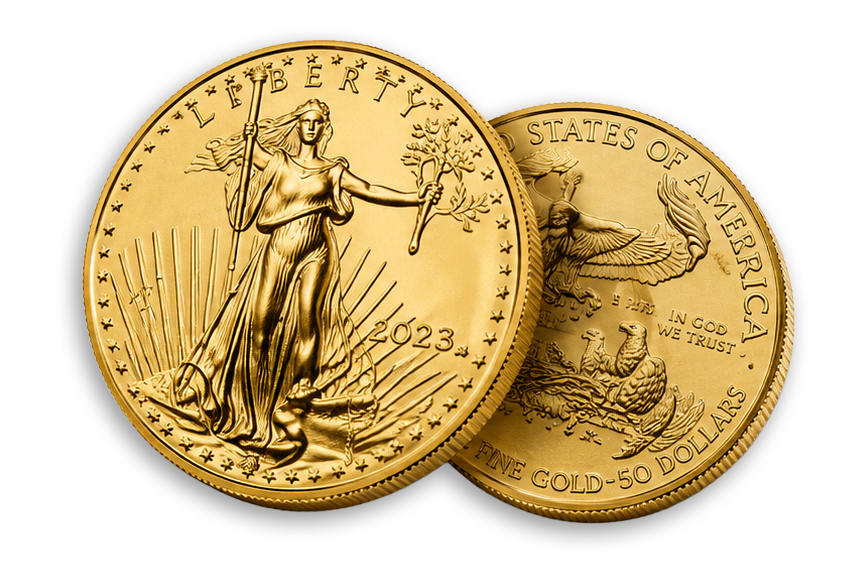
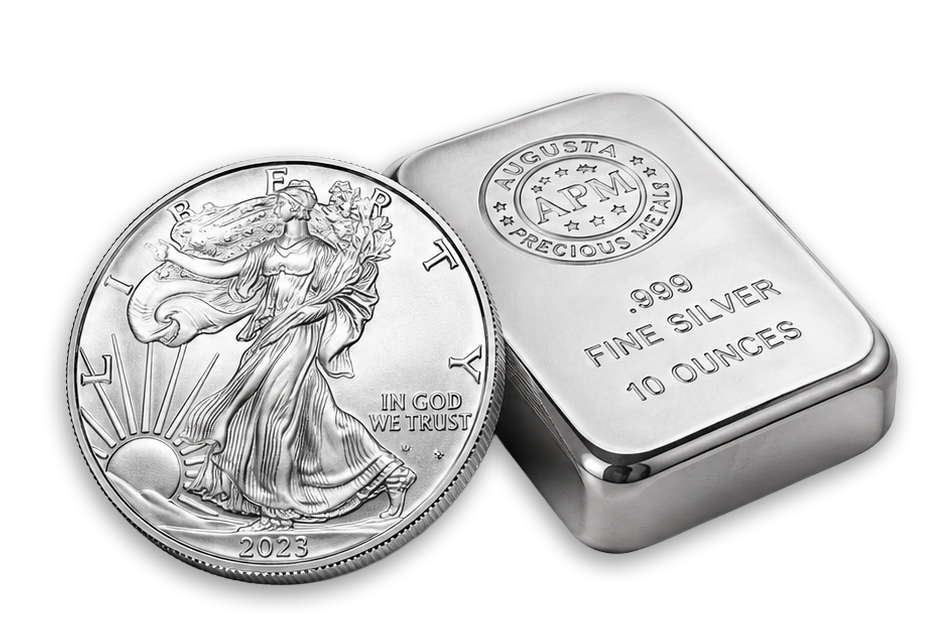
Not all gold qualifies. The IRS requires a minimum purity of .995 for gold and .999 for silver held in an IRA. Eligible products include American Gold Eagles, Canadian Gold Maple Leafs, and gold bars from approved refiners. Collectible or proof coins — products some dealers push heavily — often carry high premiums and limited resale value. Understanding what you’re buying matters as much as finding a low advertised price.

Metals are stored and insured.
You own the metals. You don’t hold them. IRS rules require that physical gold held in an IRA be stored at a compliant depository, not at home. Augusta stores metals at Delaware Depository — a fully insured, IRS-compliant private storage facility with over $1 billion in assets under custody.
What Does a Gold IRA Actually Cost?
This is where investors get surprised — and where companies that aren’t transparent can do real damage.

Account setup fee
A one-time fee to open the self-directed IRA. Varies by custodian.

Annual custodian fee
An ongoing fee charged by the custodian to administer the account. Typically $75–$150 per year.

Annual storage fee
Charged by the depository for holding and insuring your metals. Typically $100–$150 per year.

The spread — the cost nobody talks about clearly
The spread is the gap between what you pay to buy gold and what you’d receive if you sold it back the same day. It’s not on your invoice. It’s not in the headline fee disclosures. It’s the number that most directly determines the value of your investment the day of your purchase.
A 5% spread on a $100,000 investment means gold needs to rise just $5,000 in value before you break even. A 25% spread means you’re immediately down $25,000.
Always ask for the spread in writing — for the exact products being sold to you. If a company dodges that question, that’s your answer.
Augusta publishes its fees and walks through all costs — including the spread — before any transaction. The transaction agreement clearly outlines pricing and buyback terms at every step.
Gold IRA Pros & Cons


Diversifies retirement savings beyond common paper-based assets
Physical gold has often preserved purchasing power over long time horizons
Tax-advantaged structure — same benefits as common paper-based IRAs
Tangible assets held outside the traditional banking and financial system
Can act as a hedge during periods of inflation, dollar weakness, or systemic instability
You are looking for short-term gains: instant liquidity
You want an asset that pays dividends or interest
You believe the dollar & economy will be strong for decades
Diversifies retirement savings beyond common paper-based assets
Physical gold has often preserved purchasing power over long time horizons
Tax-advantaged structure — same benefits as common paper-based IRAs
Tangible assets held outside the traditional banking and financial system
Can act as a hedge during periods of inflation, dollar weakness, or systemic instability
You are looking for short-term gains: instant liquidity
You want an asset that pays dividends or interest
You want guaranteed returns
You want an asset that other people control
You believe the dollar & economy will be strong for decades
A gold IRA is not right for every investor. It’s best suited for retirement savers who already have common retirement accounts and are looking to diversify into investments that move differently from paper-based assets, as part of a broader strategy.

How to Evaluate Any Gold IRA Company
The gold IRA industry has bad actors. The way to protect yourself is to ask the same six questions of every company you consider.
What's the spread on the exact products you're selling me?
Get it in writing. For the specific coins or bars being recommended, not a range buried in a transaction agreement.
Are there "free silver" promotions — and what do they actually cost?
Free silver is paid for somewhere. Higher spreads, inflated gold pricing, or bundled products with low resale value are where those costs hide.
Are your agents paid on commission?
A commissioned agent’s income depends on what you buy and how much. That’s a structural conflict of interest. Ask before you trust any recommendation.
What's the buyback policy — in writing?
Every company claims they’ll buy metals back. Ask specifically: will you buy back anytime, at what price, and is that in the contract? Augusta has never denied a client buyback since 2012 and offers a 24-hour window to cancel if you find a better offer.
What do low-star reviews say?
Five-star reviews are written at the beginning of relationships. One-star reviews are written when things go wrong. Read both — especially what the complaints say about buybacks, fees, and service after the sale.
Who's behind the celebrity endorsement — and who's paying for it?
Conservative media hosts have been offered $20 million to promote gold companies. That cost gets passed somewhere. Augusta doesn’t use celebrity endorsements. Trust should come from track record, not from a famous face.
Why Augusta Precious Metals
Augusta was founded in 2012 on a specific premise: that a retirement saver who fully understands their investment makes a better long-term customer than one who was simply sold to.

Education Before Transaction

Transparent Pricing
Augusta puts fees in writing and explains the spread before any purchase. The transaction agreement outlines costs in plain language

Verified Track Record
A+ BBB rating. AAA BCA rating. 4,000+ five-star ratings. Zero consumer lawsuits. Named Best Overall Gold IRA Company by Money Magazine every year since 2022.

Buyback Commitment
Never denied a buyback since 2012. 24-hour cancellation window if you find a better offer.

Preferred Custodian
Augusta works with Equity Trust Company — the nation’s largest self-directed IRA provider.

Minimum Investment
Gold IRA — Frequently Asked Questions
What is the difference between a gold IRA and a regular IRA?
A regular IRA holds paper assets — stocks, bonds, mutual funds. A gold IRA is a self-directed account that holds physical precious metals. Both follow the same IRS tax rules, contribution limits, and withdrawal regulations. The difference is what’s inside and the additional requirements for custodianship and storage.
How much does it cost to open a gold IRA?
Costs include a one-time account setup fee, an annual custodian fee, and an annual storage fee. Additionally, every purchase includes a dealer spread above the spot price of gold. At Augusta, all fees are disclosed before any transaction takes place.
Can I roll my 401(k) into a gold IRA without penalty?
Yes, when done correctly. A direct rollover moves funds from your 401(k) custodian directly to your new gold IRA custodian — no taxes, no penalties, no 60-day clock. An indirect rollover puts the funds in your hands first, with a 60-day window to deposit them before penalties apply. Augusta handles the paperwork and coordinates with your existing custodian.
What gold is eligible for an IRA?
Gold must meet a minimum purity of .995 to qualify. Eligible products include American Gold Eagles, American Gold Buffalos, Canadian Gold Maple Leafs, Austrian Gold Philharmonics, and gold bars from NYMEX or COMEX-approved refiners. Collectible and proof coins are generally not eligible.
Is a gold IRA a scam?
Gold IRAs are legitimate IRS-regulated retirement accounts. The industry does have bad actors — companies with undisclosed spreads, commissioned sales agents, misleading free silver promotions, and opaque buyback terms. The way to protect yourself is to ask the six questions above of any company you consider. Augusta has an A+ BBB rating, AAA BCA rating, zero customer lawsuits, and a fully published fee structure.
What happens to my gold IRA if the company goes out of business?
Your metals are held at an independent IRS-approved depository — not by the gold IRA company. If a company closes, your metals remain in the depository under your ownership. The custodian administers the account independently of the dealer.
Can I take physical possession of my gold IRA metals?
Not while they’re in the IRA. IRS rules require metals to be stored at an approved depository. Taking possession counts as a distribution and triggers taxes and potential penalties. Once you reach retirement age, you can take distributions in the form of physical metal or cash value.
What is the minimum investment for a gold IRA at Augusta?
Augusta’s minimum investment is $50,000.
Still Researching?
Start With the Info Kit.
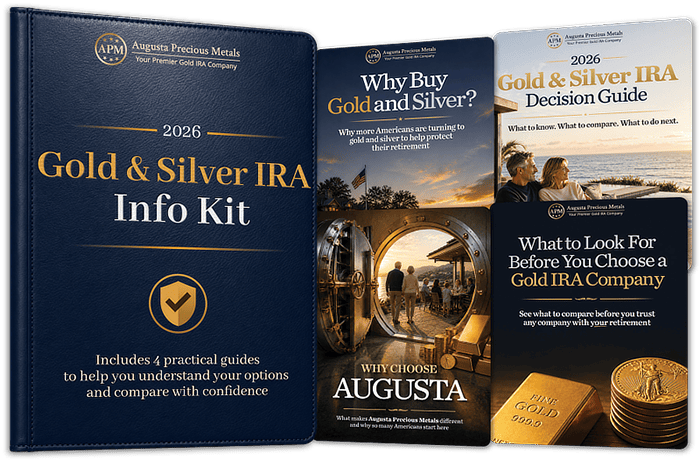
The Augusta Gold & Silver IRA Info Kit covers everything on this page in more detail — how the rollover works, what the real costs are, what questions to ask any company, and information you need to evaluate whether this is the right move for your retirement.

Opinions offered by Augusta Precious Metals are its own. Additionally, while Augusta attempts to provide factually accurate information, information presented by Augusta may turn out to be inaccurate or incomplete. You should conduct your own independent verification of any facts or opinions presented prior to making any investment.
All decisions regarding the purchase or sale of precious metals are your own, and should only be made after considering your investment objectives, risk tolerance, and level of experience. Augusta Precious Metals cannot guarantee, assure, or promise future market movement, prices, or profits. Past performance does not guarantee future results. Any investment in precious metals is speculative and could result in significant financial losses.